PCOS and Fertility: A Complete Guide to Getting Pregnant with Polycystic Ovary Syndrome


PCOS and Fertility: A Complete Guide to Getting Pregnant with Polycystic Ovary Syndrome
Polycystic ovary syndrome (PCOS) is the most common hormonal disorder in women of reproductive age, affecting an estimated 8–13% of women globally. It is also the leading cause of ovulatory infertility. Yet despite this prevalence, PCOS remains widely misunderstood — both in terms of its mechanisms and the genuine, evidence-based options available to women who want to conceive.
This guide explains what PCOS actually is, how it affects fertility, what lifestyle and medical interventions are most effective, and how women with PCOS can optimise their chances of natural conception and successful fertility treatment.
Understanding PCOS: What's Actually Happening
PCOS is a complex endocrine disorder with multiple overlapping mechanisms. The exact cause remains incompletely understood, but the condition involves:
- Insulin resistance: Present in 70–80% of PCOS cases, causing elevated insulin levels that stimulate the ovaries to produce excess androgens (testosterone, DHEA-S)
- Hyperandrogenism: Elevated androgens disrupt follicle development, preventing ovarian follicles from maturing and releasing eggs (anovulation)
- LH/FSH imbalance: An elevated LH:FSH ratio (often 2:1 or 3:1 in PCOS vs. 1:1 in a normal cycle) disrupts the hormonal cascade required for ovulation
- Polycystic ovarian morphology: Ultrasound shows multiple small follicles (12+ per ovary, or increased ovarian volume) — these are "arrested" follicles that failed to reach ovulation
Diagnosis requires at least 2 of 3 Rotterdam criteria: irregular/absent ovulation, clinical or biochemical signs of hyperandrogenism, and polycystic ovarian morphology on ultrasound.
How PCOS Affects Fertility
The primary fertility challenge in PCOS is anovulation — irregular or absent ovulation. Without ovulation, there is no egg to fertilise. This is the reason PCOS is classified as an ovulatory disorder and why cycle regularity is a key treatment target.
Beyond anovulation, PCOS may also affect:
- Egg quality: Chronic hormonal imbalance and elevated insulin can impair oocyte development
- Endometrial receptivity: LH hyperstimulation and insulin resistance can affect uterine lining quality
- Miscarriage risk: Some studies suggest slightly elevated early pregnancy loss in PCOS, possibly related to elevated LH and insulin
- Cervical mucus: Hormonal irregularities can reduce fertile-quality cervical mucus production, hindering sperm transport
The encouraging reality: PCOS is a highly treatable cause of infertility. When ovulation is successfully restored — whether through lifestyle changes, medication, or both — pregnancy rates in women with PCOS are comparable to the general population.
Lifestyle Interventions: The Most Powerful First Step
For the majority of women with PCOS and insulin resistance, lifestyle modification is the most powerful and sustainable first-line treatment — often producing more dramatic results than medication alone.
Weight management and insulin sensitivity
In overweight women with PCOS, even modest weight loss of 5–10% of body weight can restore ovulation and regular menstrual cycles. A landmark study found that 55–100% of previously anovulatory PCOS women resumed ovulation after losing just 5% of body weight through dietary changes.
The mechanism: weight loss reduces insulin levels, which in turn lowers androgen production, restores LH/FSH balance, and allows follicle maturation to proceed normally.
Diet for PCOS
No single diet has been proven superior for PCOS, but several dietary principles consistently improve insulin sensitivity and hormonal balance:
- Lower glycaemic index foods that cause smaller blood sugar and insulin spikes
- Higher protein intake (25–30% of calories) to improve satiety and reduce insulin demand
- Increased fibre from vegetables, legumes, and whole grains
- Reduction of refined carbohydrates and added sugars
- Anti-inflammatory foods: olive oil, fatty fish, berries, leafy greens
Exercise
Regular physical activity — particularly a combination of aerobic exercise and strength training — significantly improves insulin sensitivity independent of weight loss. Even in the absence of weight change, 30 minutes of moderate exercise 5 days per week meaningfully improves insulin metrics in PCOS.
Inositol: The Most Evidence-Backed PCOS Supplement
Among the growing number of supplements researched for PCOS, inositol — specifically the combination of myo-inositol (MI) and D-chiro-inositol (DCI) — has the strongest evidence base.
Inositol is a naturally occurring sugar that functions as a secondary messenger in insulin signalling pathways. In PCOS, inositol deficiency and impaired inositol metabolism contribute to insulin resistance. Supplementation corrects this deficiency directly.
Clinical evidence for MI:DCI (40:1 ratio) supplementation in PCOS:
- Restoration of regular menstrual cycles and ovulation in anovulatory PCOS women
- Reduction of fasting insulin and improved insulin sensitivity
- Lower testosterone and DHEA-S levels
- Improved egg quality and fertilisation rates in IVF cycles
- Comparable efficacy to metformin for cycle restoration with significantly fewer gastrointestinal side effects
A 2019 Cochrane-affiliated systematic review concluded that inositol is an effective and well-tolerated treatment for PCOS-related infertility. The standard protocol is 4g myo-inositol + 400mg D-chiro-inositol daily, taken in two doses.
Medical Treatments for PCOS Infertility
Letrozole (first-line ovulation induction)
Letrozole, an aromatase inhibitor originally developed for breast cancer treatment, is now the recommended first-line medication for ovulation induction in PCOS. Multiple studies, including a large NEJM trial, have shown letrozole produces higher ovulation rates, pregnancy rates, and live birth rates than clomiphene citrate in PCOS — with lower multiple pregnancy risk.
Clomiphene citrate
Clomid (clomiphene) was the standard of care for PCOS ovulation induction for decades and remains widely used. It successfully induces ovulation in 70–85% of PCOS women, with pregnancy rates of 30–40% over 6 cycles. Clomid resistance (failure to ovulate despite adequate doses) occurs in approximately 20–25% of PCOS cases.
Metformin
Metformin, an insulin-sensitising medication used for type 2 diabetes, is frequently prescribed for PCOS — particularly in women with significant insulin resistance. In combination with letrozole or clomiphene, metformin can improve ovulation and pregnancy rates, particularly in clomid-resistant PCOS.
IVF for PCOS
When oral ovulation induction fails, IVF is typically the next option. Women with PCOS have good ovarian reserve and typically produce many eggs in stimulated cycles — but are at high risk for ovarian hyperstimulation syndrome (OHSS). Careful protocol modification and GnRH antagonist protocols minimise this risk. PCOS women who have healthy eggs often have good IVF outcomes once ovulation is controlled.
Ovulation Tracking with PCOS
Standard ovulation predictor kits (OPKs) can be problematic for women with PCOS because elevated baseline LH levels can produce false-positive results. Advanced digital monitors tracking both estrogen and LH are more reliable. Transvaginal ultrasound follicle tracking — where a specialist monitors follicle development to confirm ovulation — is the gold standard for PCOS patients in monitored cycles.
Cervical Mucus and Conceive Plus
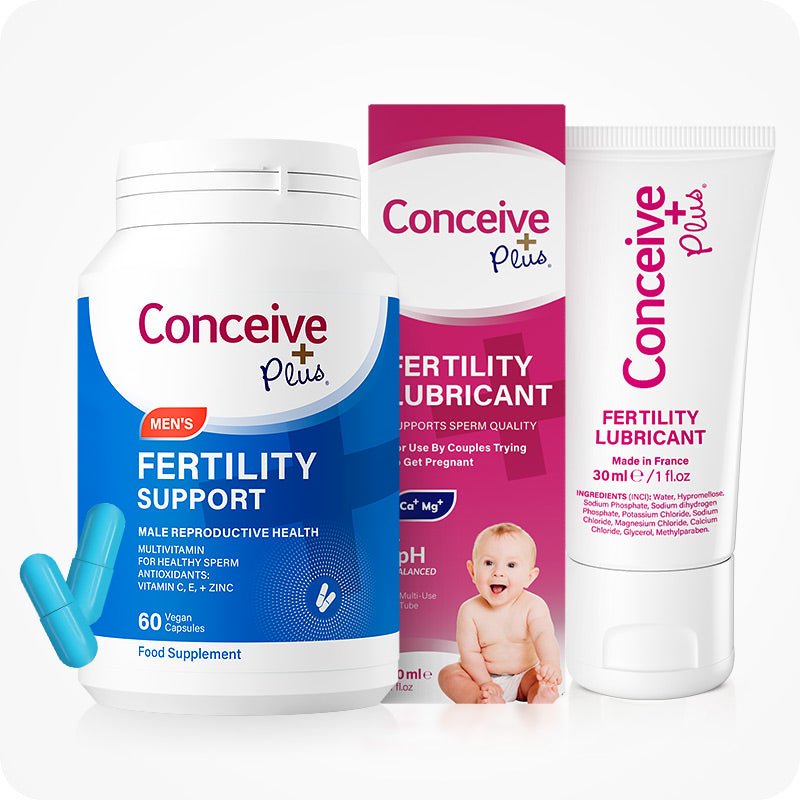
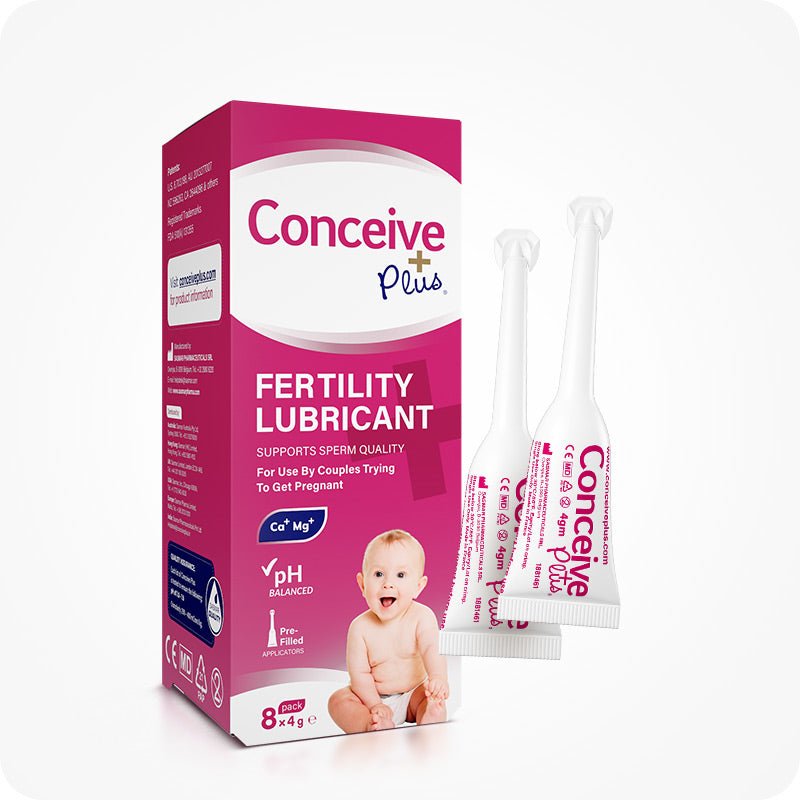
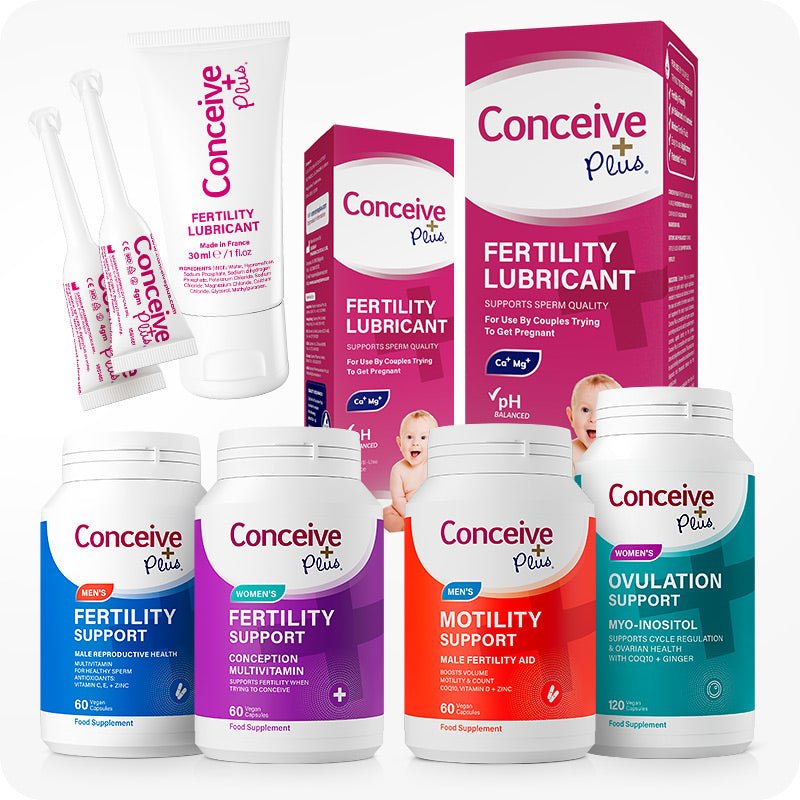
Hormonal irregularities in PCOS can reduce fertile-quality cervical mucus production — particularly around ovulation. When natural mucus quality is insufficient, sperm transport to the egg is compromised. Conceive Plus fertility lubricant provides a sperm-safe, pH-balanced gel that mimics fertile cervical mucus, supporting sperm motility without the harmful effects of standard lubricants on sperm function.
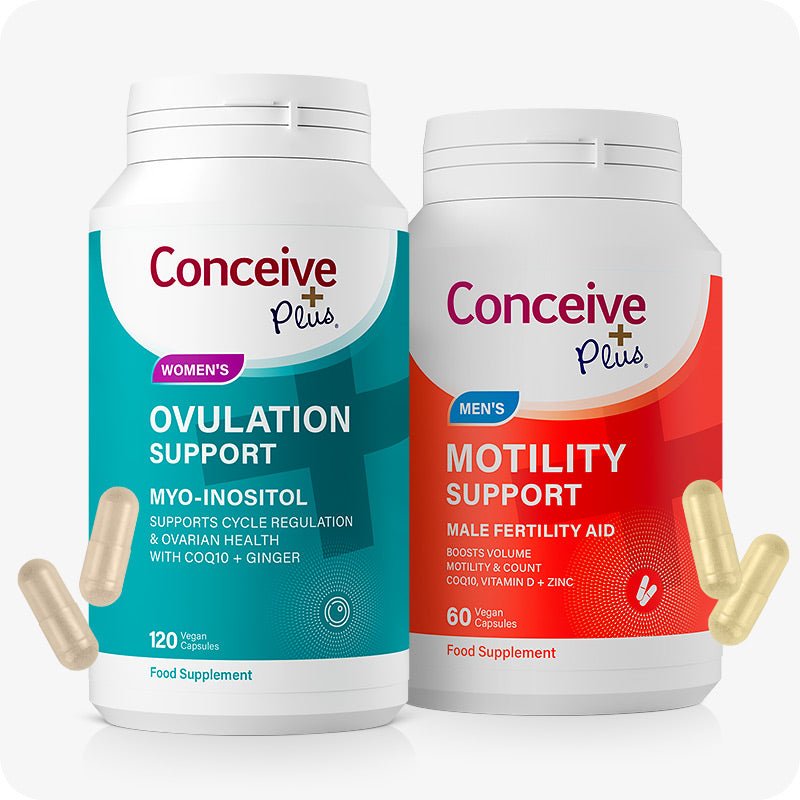
Many women with PCOS also benefit from Conceive Plus fertility supplements, which provide inositol, vitamin D, CoQ10, and other nutrients that support hormonal balance and egg quality.
Explore Conceive Plus fertility products — from sperm-safe lubricant to supplements with inositol for hormonal support. Trusted across Europe.
Mental Health and PCOS: The Overlooked Dimension
PCOS is associated with significantly elevated rates of anxiety and depression — not just as a consequence of the fertility diagnosis, but due to underlying hormonal imbalances (particularly androgens and their downstream effects on neurotransmitters). Women with PCOS are 3–7 times more likely to experience anxiety disorders than women without the condition.
Addressing mental health is not ancillary to fertility treatment — it's integral to it. Stress hormones (cortisol) can further disrupt GnRH pulsation and worsen hormonal imbalance. Psychological support, including cognitive behavioural therapy (CBT) and mindfulness-based interventions, has shown benefit in improving both mental health outcomes and fertility-related quality of life in PCOS.
Frequently Asked Questions About PCOS and Fertility
Q: Can women with PCOS get pregnant naturally?
A: Yes — many women with PCOS conceive naturally, particularly those with milder symptoms and some residual ovulatory function. For those with anovulation, lifestyle changes (especially weight loss in overweight women) can restore natural ovulation and lead to natural conception.
Q: Does PCOS go away after pregnancy?
A: PCOS is a chronic condition that does not resolve with pregnancy. However, some women experience improved cycle regularity postpartum, particularly if breastfeeding affects their hormonal profile. Symptoms tend to improve with age as androgen levels naturally decline.
Q: Is inositol safe to take throughout the TTC process?
A: Inositol has an excellent safety profile in research studies. It's commonly continued until a positive pregnancy test, at which point transition to a standard prenatal vitamin is recommended (inositol supplementation in pregnancy requires specialist guidance).
Q: Can metformin help me get pregnant with PCOS?
A: Metformin can help some women with PCOS — particularly those with significant insulin resistance — ovulate more regularly, which can improve pregnancy rates. However, it's generally less effective as a standalone treatment than letrozole for ovulation induction, and is often used in combination.
Q: How does PCOS affect IVF outcomes?
A: Women with PCOS typically produce many eggs during IVF stimulation (good for egg retrieval) but are at higher risk for OHSS. Carefully managed protocols — including trigger shot choice and segmented cycles (freeze-all with subsequent frozen embryo transfer) — mitigate these risks and can produce excellent outcomes.
Q: Can PCOS cause miscarriage?
A: Some research suggests modestly elevated miscarriage rates in PCOS pregnancies, potentially related to elevated LH, insulin resistance, or androgen levels in early pregnancy. Metformin continuation through the first trimester is sometimes recommended by fertility specialists to reduce miscarriage risk in high-risk PCOS patients.
Q: If I have regular periods, do I still have PCOS?
A: Yes, possibly. Regular periods don't guarantee regular ovulation. Luteal phase defects and other subtle hormonal abnormalities can produce regular bleeding while ovulation is impaired. PCOS diagnosis requires the Rotterdam criteria, not just menstrual irregularity.
Q: What is the first-line treatment for PCOS infertility?
A: Lifestyle modification (diet, exercise, weight management) is recommended first for overweight women. For non-obese anovulatory PCOS, letrozole is the evidence-based first-line pharmacological treatment per ESHRE 2023 guidelines. Inositol is an effective adjunct treatment with strong evidence in its own right.
Discover Conceive Plus — fertility lubricants and supplements designed for women on the conception journey across Europe.